
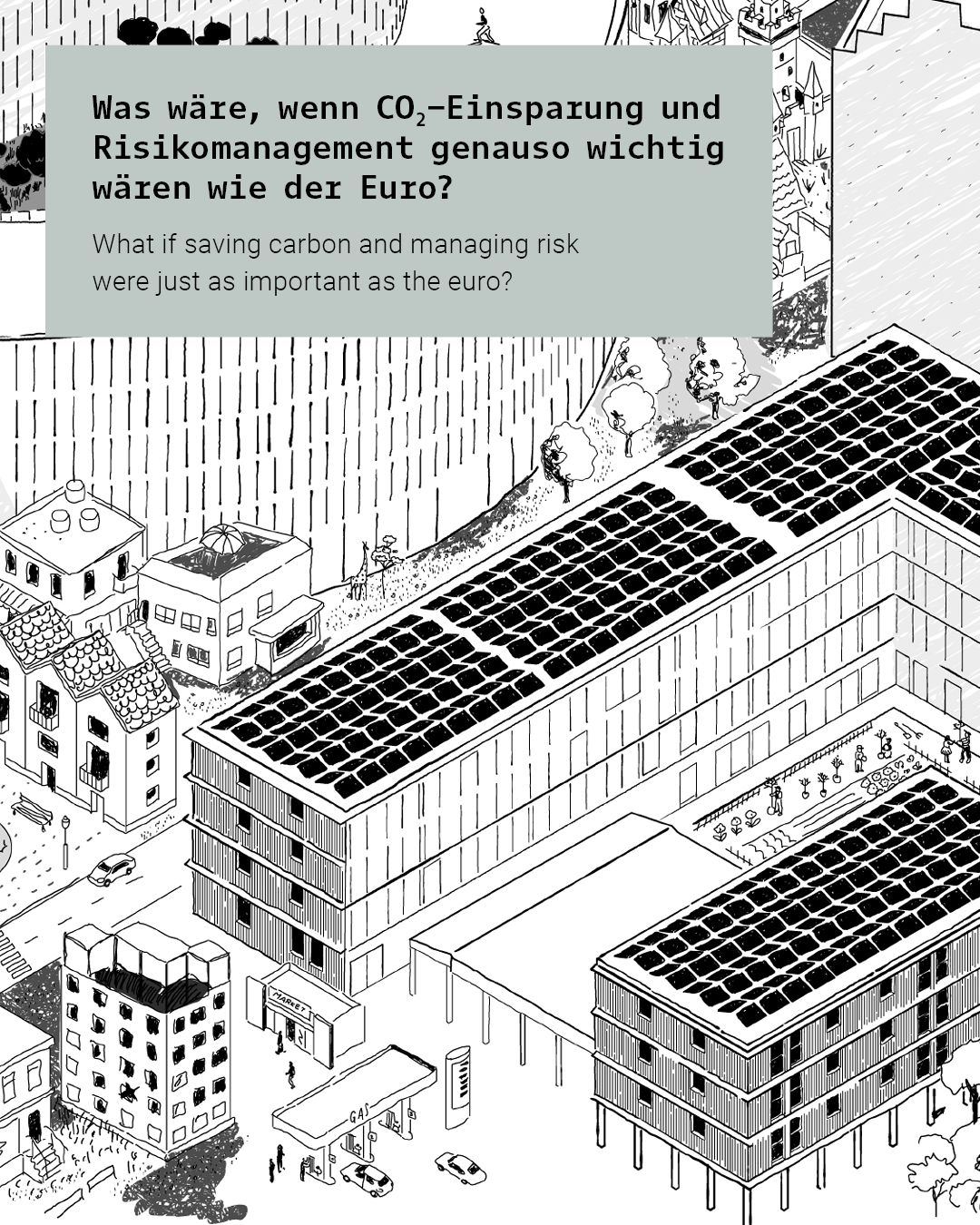
What if saving carbon and managing risk were just as important as the euro?
Building sustainably is complicated and expensive: a myth that is still stubbornly held in the construction and property industry. But is this really the case? Or are the alleged extra costs more just an excuse to justify doing nothing when it comes to sustainability? Because what are these costs being compared to? What's the difference between a conventional building and a sustainable one? And why should the conventional building be the benchmark and not the other way round? To properly make sense of this issue, it's worth taking a step back.
DGNB likes to equate sustainability with quality and future viability. The alternative would be an inferior, non-durable construction method. In a time of climate change and scarce resources, that isn't an option. Investing in a building's sustainability also improves health and wellbeing. A result that any company would be pleased with: fewer sick days and satisfied employees. Lower operating or maintenance costs offset potential extra expense during construction. Fewer vacant properties and an increase in buildings' value are other effects. Investment risks can be reduced as regulatory requirements increase. In the future, it will become impossible to insure buildings that are unprepared for climate risks. And the cost per kilogram of carbon emitted will be a lot higher than it is today.
These are all good arguments. But what if there's no budget left for the initial planning and building costs? In principle, this isn't a problem either, as building sustainably doesn't have to be more expensive. After all, there's no greater cost driver than expensive redesigns required once construction is already underway because the alternatives weren't considered much earlier. The principle of sustainability certification can help here if used at the earliest possible stage of planning. Reducing construction costs is mainly about making the right decisions at the right time – with long-term vision and taking into account all the conflicting objectives that inevitably arise during construction. In this sense, building sustainably isn't about competing for awards, but about weighing up options and finding the best solution
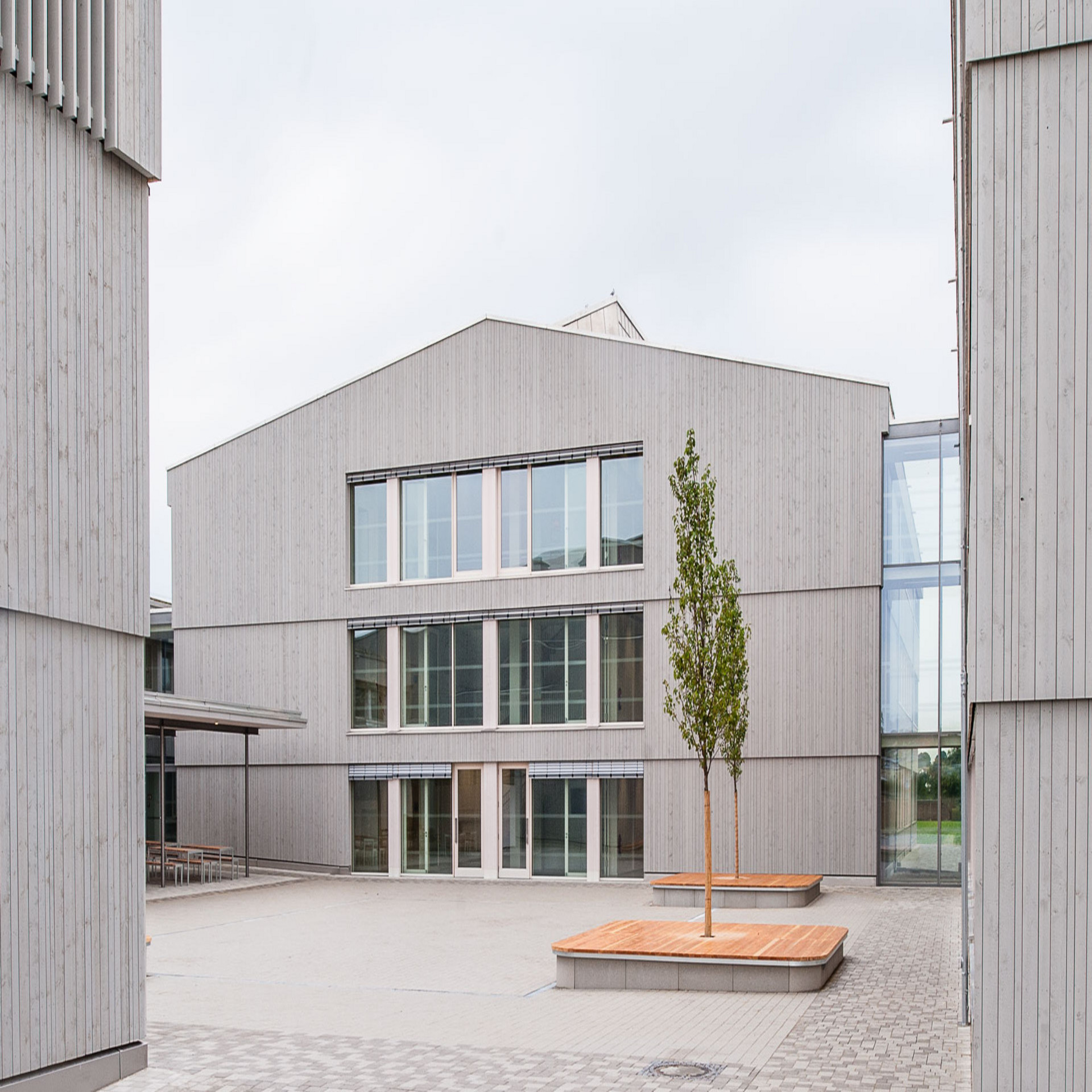
Schmuttertal-Gymnasium, Diedorf
This high school is an ensemble of modular timber buildings that was erected in a very short time thanks to digital planning and prefabrication. The adaptability of the energy-plus building, which allows for flexible room configurations, also makes it a prime example for other school buildings.
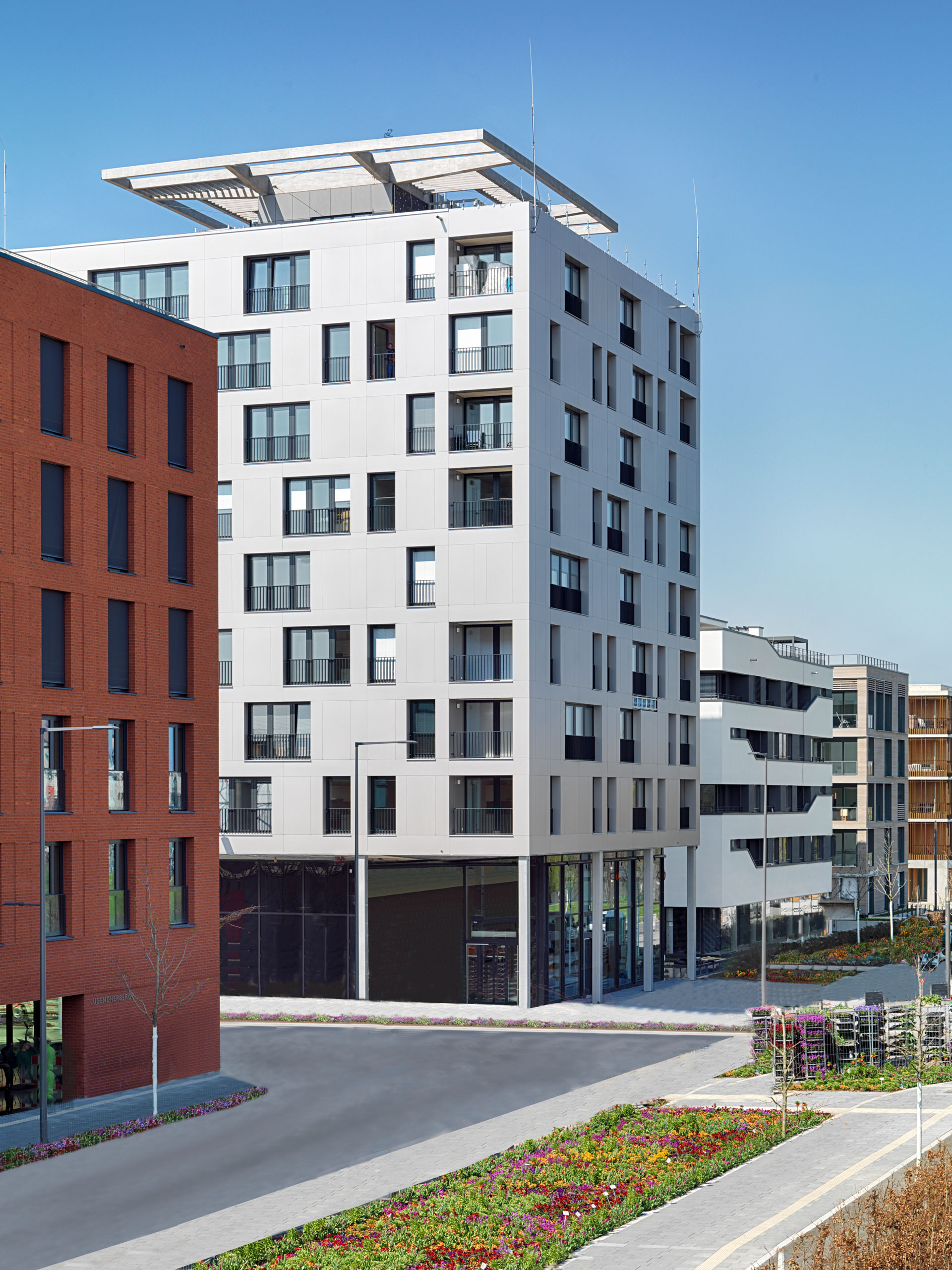
SKAIO, Heilbronn
Formerly Germany's tallest timber high-rise, SKAIO is sensibly integrated into its district and has a well thought-out mix of uses. While some of the apartments are very small, the communalised auxiliary functions significantly boost their living standards while making it possible to keep rents at socially responsible levels.
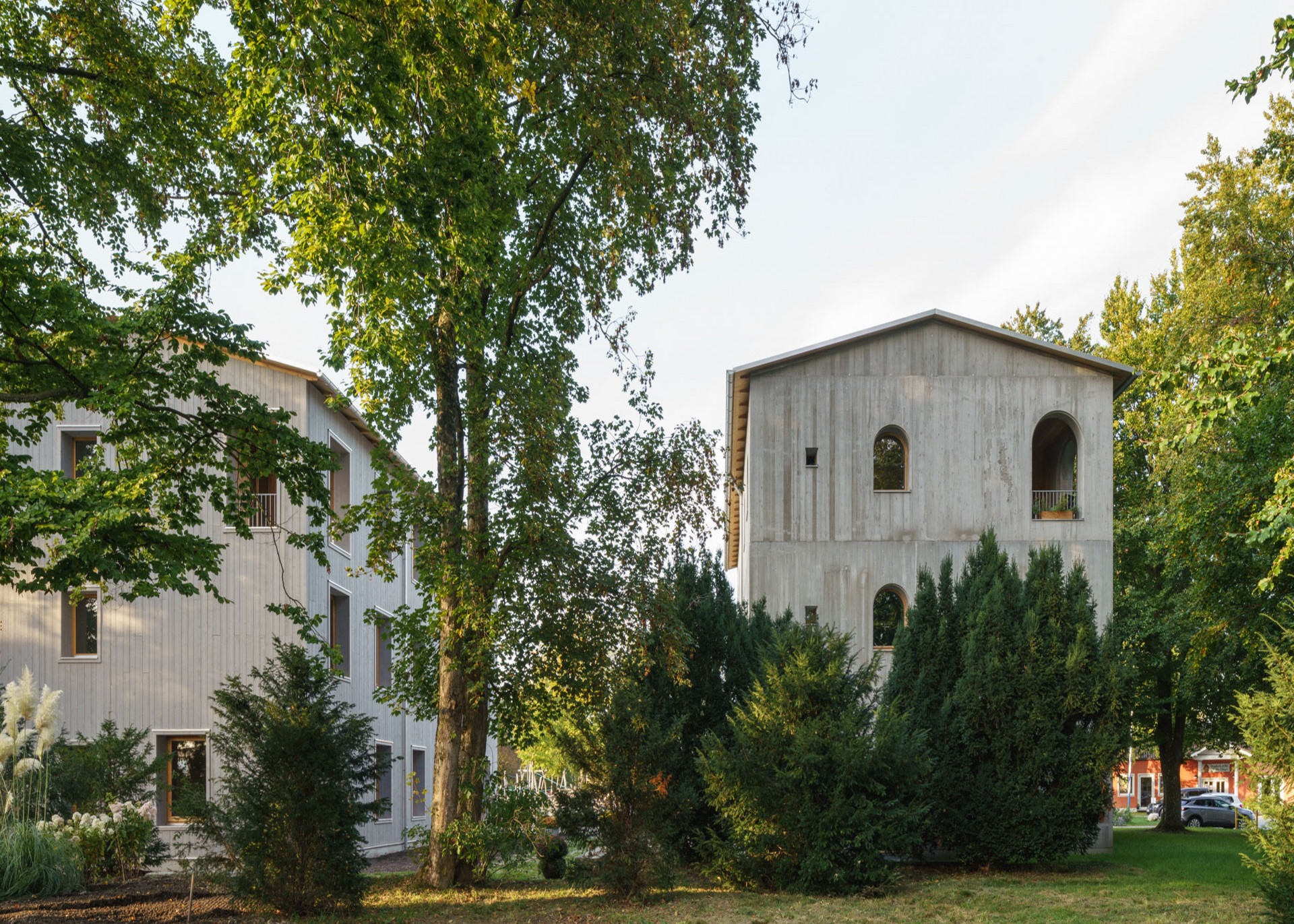
Einfach Bauen, Bad Aibling
For this academically observed long-term project named Einfach Bauen ("building simply"), three identical houses were erected – one made of lightweight concrete, one made of solid timber and one made of masonry. The ratio of volume to window area was optimised with up to 2600 variants being tried in order to reduce building technology to a minimum.
You want to get actively involved in sustainable architecture yourself? Start here:
What if we always viewed costs from a long-term perspective as well?
Buildings are more complex and long-lived than other things we use every day. That’s why just looking at the cost of planning and construction isn’t enough. Recurring expenses over the course of a building’s use – such as cleaning, maintenance, repair and energy consumption – can be underestimated and thus lead to high costs later on. Calculating life cycle costs helps in finding the most economical and highest quality solution over the long term by estimating the expenses a building will generate over its entire lifetime and where investment risks are lurking.
One study that highlights why it is worth considering costs over the entire life cycle is the study "Life cycle-based assessment of buildings an analysis of 28 residential buildings with regard to climate impact and costs in Germany".
What if regulation worked to support transformation and wasn’t something we saw as a threat?
When it comes to the bureaucracy governing construction in Germany, it’s easy to feel that the regulations are too numerous, contradict each other in places and are more effort than they’re worth. Nevertheless, these constraints are sometimes necessary so that there are consequences for those who do nothing. One example is the EU taxonomy – a classification system that defines what is ecologically sustainable in different areas of economic activity such as the property sector. Those who do nothing risk their buildings losing value.
Share your thoughts!
Want to share your thoughts on the topic or the exhibition? Feel free to use the visuals below.
If you're planning to post on LinkedIn, please link to us! To the DGNB Account
On to other topics covered by the exhibition
Your contact
Katrin Wolf
Deputy Director / Manager Trade Fairs, Events and Partnerships
- Phone: +49-711-722322-38
- Email: k.wolf@dgnb.de
Paul Bandowski
Project Manager Content Creation
- Phone: +49-711-722322-144
- Email: p.bandowski@dgnb.de