
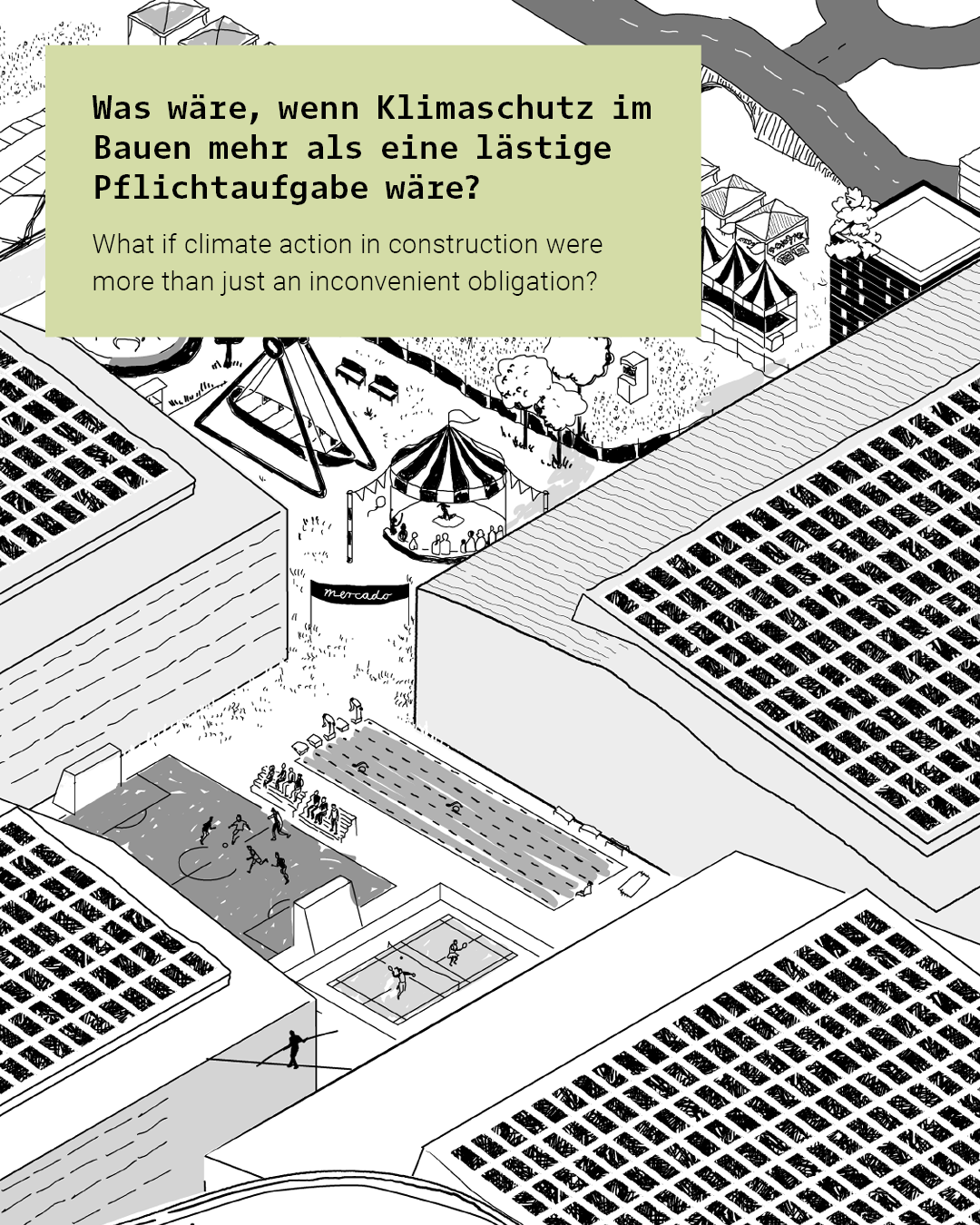
What if climate action in construction were more than just an inconvenient obligation?
Hamburg is to become carbon neutral by 2040, five years earlier than planned. This was decided by its citizens in the October 2025 climate action referendum. An encouraging piece of news at a time when there are certainly more popular public and political discussion topics than the environment. What about you? Are you feeling a little deflated when it comes to combating man-made climate change? Sure, the need for urgent measures is widely recognised, and it's only a few years since millions of people took to the streets to demand climate action. But today? Don't we have other concerns?
Let's remind ourselves of some oft-cited stats: the building sector is responsible for around 40 percent of Germany's carbon emissions, and the construction and deconstruction of buildings generates 55% of the country's waste by volume. The sector is also in pole position – in the negative sense – when it comes to resource consumption. Even if these figures aren't particularly nuanced, they make one thing clear: buildings are part of the climate problem. But they can also be part of the solution – if architectural professionals see climate-friendly construction as a must.
But what does that really mean? For each individual building, the paramount task is to reduce carbon emissions resulting from its construction and use as much as possible. How? First and foremost, by asking what is probably the most important question right at the start of planning: how much do we actually need? How much space, how much comfort, how much resources? Starting from this principle of sufficiency, more possibilities present themselves – like the importance of choosing long-lived construction materials and products that are reused or from low-carbon manufacturing.
Another option is a circularity-oriented construction method that means the building can be deconstructed again at the end of its life. The entire life cycle should always be taken into consideration, including later use and the resulting emissions. Methods like life-cycle assessment that make it possible to weigh up conflicting objectives are helpful here. Lastly, it's also about understanding buildings as energy producers. There are now plenty of ways for buildings to generate energy renewably on site, many of which don't negatively impact architectural quality. Only if we take these approaches can buildings become carbon neutral.
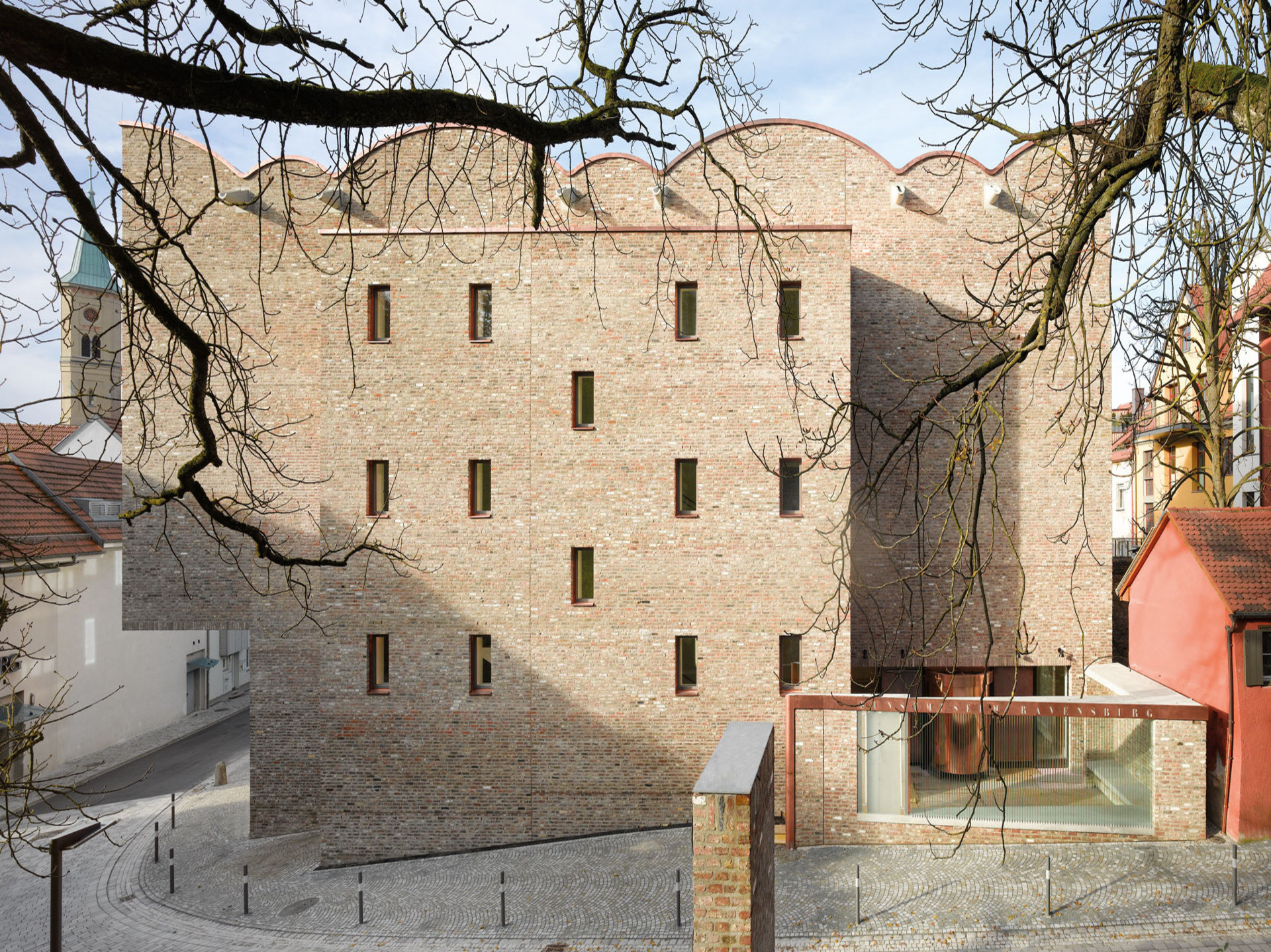
Kunstmuseum Ravensburg
Long before current debates about circular construction, this museum showed how the principle of conserving resources wherever possible could be implemented in practice. Old tiles from a demolished monastery were used in the building envelope and roof. The materials were selected and fitted so as to allow the building to be readily deconstructed again.
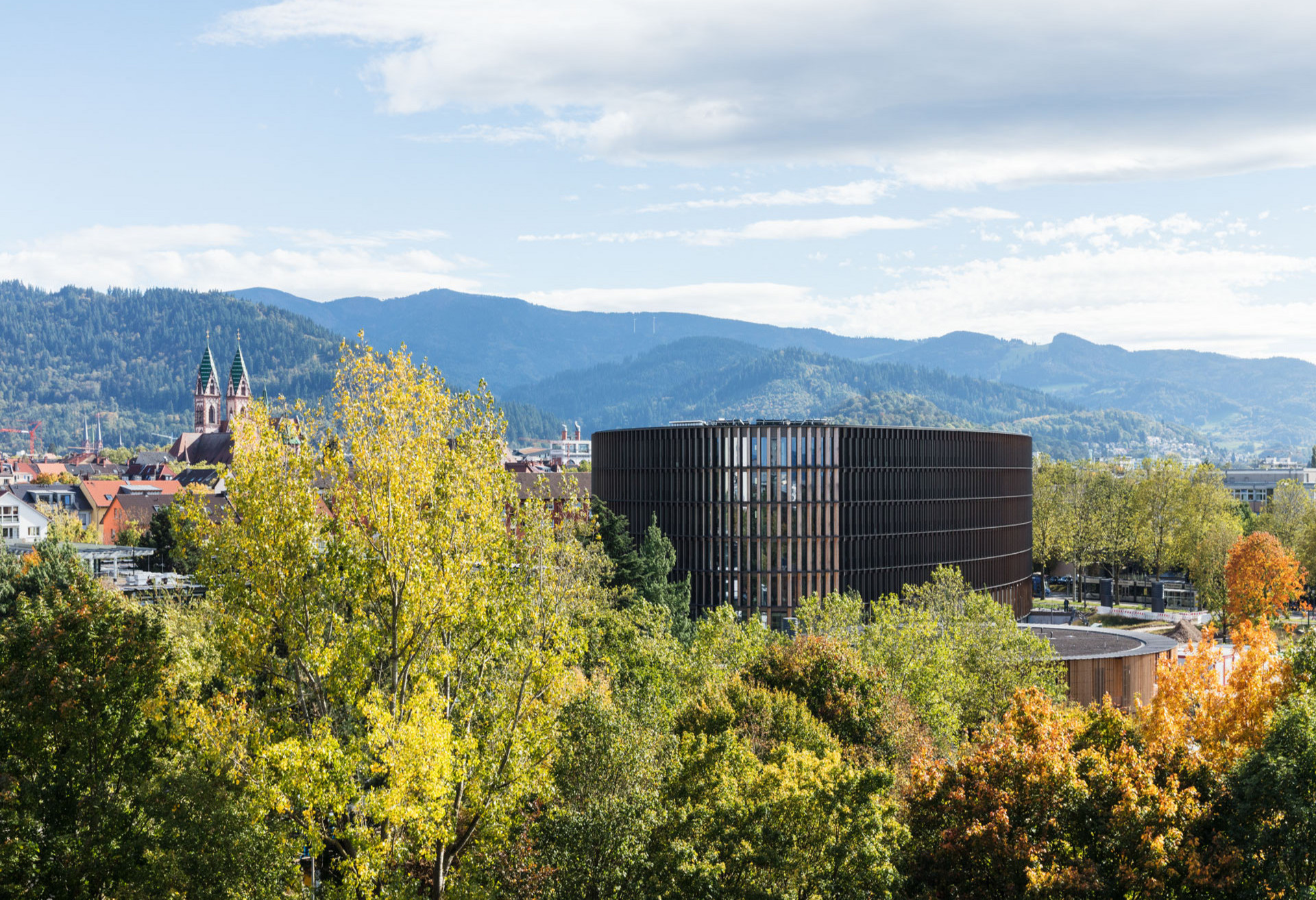
Neues Rathaus im Stühlinger, Freiburg
This town hall in a suburb of the city of Freiburg was the world's first public building to generate more energy than it consumed. It boasts a striking larch wood façade with movable vertical slats fitted with photovoltaic modules to generate energy and provide shade.
You want to get actively involved in sustainable architecture yourself? Start here:
What if we knew the real carbon emissions of every building?
We’re actually well on the way to doing so. Because the first step – performing a building lifecycle assessment – has become more and more mainstream in the construction and property sector. What does this involve? It’s a method to comprehensively calculate and transparently model a building’s environmental effects, from its creation and use to the end of its life. Applied correctly, life cycle assessment makes it easier to systematically exploit the potential for optimisation when it comes to climate action and choosing appropriate materials.
What if it were clear which construction products were suitable for sustainable building?
Choosing suitable materials for sustainable buildings isn’t as straightforward as you might think. Depending on the product group, application and amount of material used in the building, some aspects are more important than others. Help is provided by the DGNB Navigator product database and the “Building Materials and Sustainability” report, which summarises the key principles for selecting materials sustainably: Are the products reused, separable by type and free from harmful substances? Do they originate from the local area? And what about their CO2 balance?
What if there were a complete resource passport for every building?
Knowing which materials were used in a building is important for more than just documentation purposes. With a tool like the DGNB Building Resource Passport it also has a positive effect on current planning and decision-making. At least when paired with the goal of using resources as sparingly as possible and only installing what is actually needed. It also helps when making holistic decisions about possible conversion or deconstruction and using existing buildings as an urban mine.
Share your thoughts!
Want to share your thoughts on the topic or the exhibition? Feel free to use the visuals below.
If you're planning to post on LinkedIn, please link to us! To the DGNB Account
On to other topics covered by the exhibition
Your contact
Katrin Wolf
Deputy Director / Manager Trade Fairs, Events and Partnerships
- Phone: +49-711-722322-38
- Email: k.wolf@dgnb.de
Paul Bandowski
Project Manager Content Creation
- Phone: +49-711-722322-144
- Email: p.bandowski@dgnb.de